 Skip to content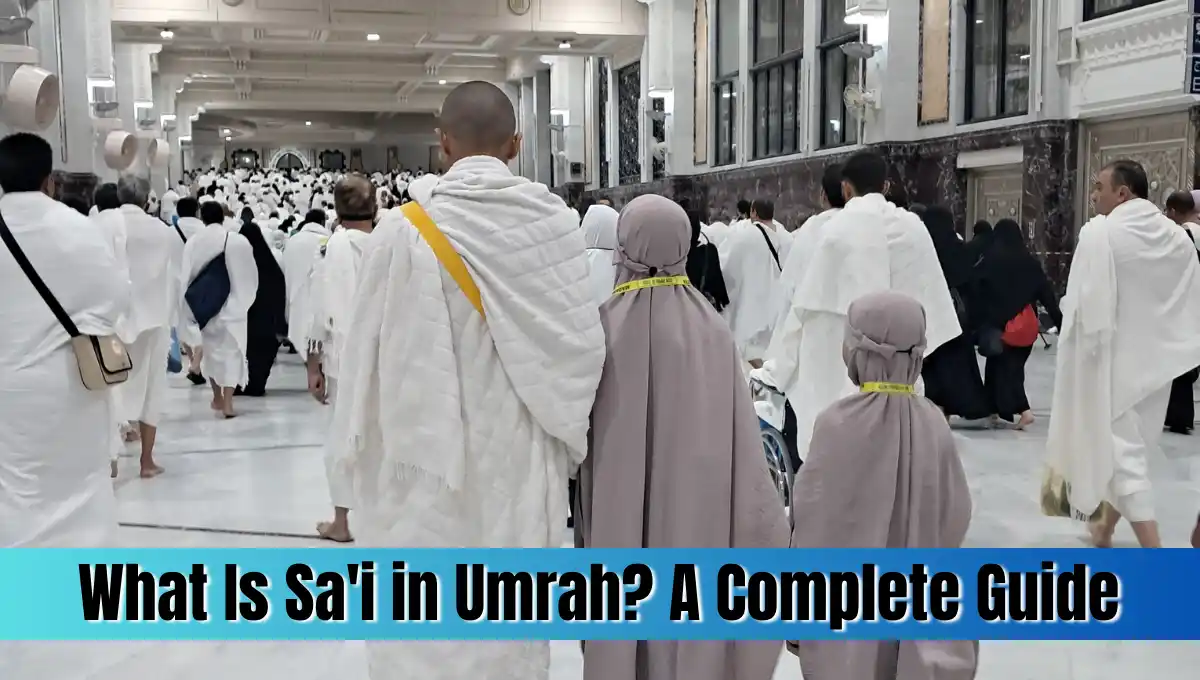
Sa’i is one of the essential rituals of Umrah and holds great spiritual significance in Islam. It involves walking between the two hills of Safa and Marwah inside Masjid al-Haram in Makkah. Every pilgrim performing Umrah completes this act after Tawaf around the Kaaba.
Sa’i commemorates the unwavering faith and patience of Hajar (AS), the wife of Prophet Ibrahim (AS), as she searched for water for her son, Prophet Ismail (AS). Understanding the meaning, purpose, and correct method of performing Sa’i can help make your Umrah more meaningful and spiritually rewarding.
If you are planning your pilgrimage from the UK, booking Umrah packages 2027 early can help you secure better travel dates, accommodation, and flights. It also gives you plenty of time to learn each Umrah ritual, including Sa’i, so you can perform your pilgrimage with confidence and peace of mind.
What Does Sa’i Mean?
The Arabic word Sa’i means “to strive” or “to make an effort.” In the context of Umrah, it refers to walking seven times between the hills of Safa and Marwah. This act symbolises perseverance, trust in Allah, and hope during difficult times.
Sa’i reminds Muslims that sincere effort, combined with faith in Allah, brings His mercy and blessings.
Why Is Sa’i Performed?
Sa’i honours the remarkable story of Hajar (AS). When Prophet Ibrahim (AS) left Hajar (AS) and baby Ismail (AS) in the barren valley of Makkah by Allah’s command, she searched desperately for water. She ran between Safa and Marwah seven times before Allah caused the blessed Zamzam well to spring forth.
This powerful event teaches Muslims valuable lessons, including:
- Complete trust in Allah.
- Patience during hardship.
- Never giving up hope.
- The importance of making sincere effort before expecting results.
Every pilgrim reflects on these lessons while performing Sa’i.
Is Sa’i Obligatory in Umrah?
Yes. Sa’i is one of the essential pillars (Arkan) of Umrah. Without completing it correctly, the Umrah is not complete.
The main rituals of Umrah include:
- Entering the state of Ihram.
- Performing Tawaf around the Kaaba.
- Performing Sa’i between Safa and Marwah.
- Cutting or shaving the hair (Halq or Taqsir).
Each step should be completed in the proper order.
Where Is Sa’i Performed?
Today, Sa’i is performed inside Masjid al-Haram along a dedicated pathway connecting Safa and Marwah. The area is spacious, air-conditioned, and designed to accommodate millions of pilgrims throughout the year.
There are also separate walking areas and accessibility facilities for elderly pilgrims and wheelchair users.
How to Perform Sa’i Step by Step
1. Begin at Safa
After completing Tawaf, pilgrims proceed towards Safa.
When reaching Safa, face the Kaaba and praise Allah. Many pilgrims recite verses from the Qur’an and make personal duas before beginning.
2. Walk Towards Marwah
Walk calmly from Safa to Marwah while remembering Allah and making dua.
Male pilgrims are encouraged to walk briskly between the two green markers, following the Sunnah of the Prophet Muhammad (peace be upon him). Women continue walking at a normal pace throughout.
3. Reach Marwah
Upon reaching Marwah, make dua and remember Allah before turning back towards Safa.
The journey from Safa to Marwah counts as one lap.
4. Complete Seven Laps
Continue until you have completed seven laps.
The sequence is:
- Safa to Marwah = 1
- Marwah to Safa = 2
- Safa to Marwah = 3
- Marwah to Safa = 4
- Safa to Marwah = 5
- Marwah to Safa = 6
- Safa to Marwah = 7
The final lap ends at Marwah.
What Should You Recite During Sa’i?
There is no single compulsory dua for Sa’i.
Pilgrims may:
- Glorify Allah.
- Recite the Qur’an.
- Send blessings upon the Prophet (peace be upon him).
- Make personal duas.
- Ask Allah for forgiveness, guidance, health, and success.
This is a valuable opportunity to speak sincerely to Allah.
How Long Does Sa’i Take?
The time required depends on walking speed and crowd levels.
On average:
- 35–60 minutes during normal days.
- Longer during Ramadan or peak pilgrimage seasons.
Take your time and focus on worship rather than rushing.
Common Mistakes During Sa’i
Many first-time pilgrims unintentionally make small mistakes.
Avoid these common errors:
- Starting from Marwah instead of Safa.
- Miscounting the seven laps.
- Rushing without reflecting on the significance.
- Forgetting that only men perform the brisk walk between the green lights.
- Becoming distracted by mobile phones or conversations.
Learning the ritual before travelling helps prevent confusion.
Can Elderly Pilgrims Perform Sa’i?
Yes.
Masjid al-Haram provides excellent facilities for elderly pilgrims, including:
- Wheelchair services.
- Escalators and lifts.
- Wide walking paths.
- Rest areas.
Pilgrims who require assistance can complete Sa’i comfortably.
Spiritual Lessons from Sa’i
Sa’i teaches many timeless lessons that apply to everyday life.
These include:
- Trust Allah even during uncertainty.
- Continue striving despite challenges.
- Patience brings reward.
- Allah’s mercy arrives in unexpected ways.
- Every sincere effort is valued by Allah.
For many pilgrims, Sa’i becomes one of the most emotional moments of their Umrah journey.
Tips for UK Pilgrims
If you’re travelling from the UK, these tips can make Sa’i more comfortable:
- Wear comfortable footwear before entering Ihram (remove it when required in the ritual areas as appropriate).
- Stay hydrated before beginning.
- Perform Sa’i during quieter hours if possible.
- Carry only essential belongings.
- Learn the ritual before arriving in Makkah.
- Stay patient during busy periods.
Being well prepared allows you to focus on worship rather than logistics.
Final Thoughts
Sa’i is much more than walking between two hills. It is a powerful reminder of faith, determination, patience, and complete reliance on Allah. Every step reflects the inspiring example of Hajar (AS), whose unwavering trust continues to motivate millions of Muslims around the world.
For UK pilgrims planning their spiritual journey, Bismillah Travel offers trusted Umrah travel services that can help you organise your pilgrimage with confidence, giving you more time to prepare for important rituals like Sa’i and make the most of your visit to the holy cities.
