 Skip to content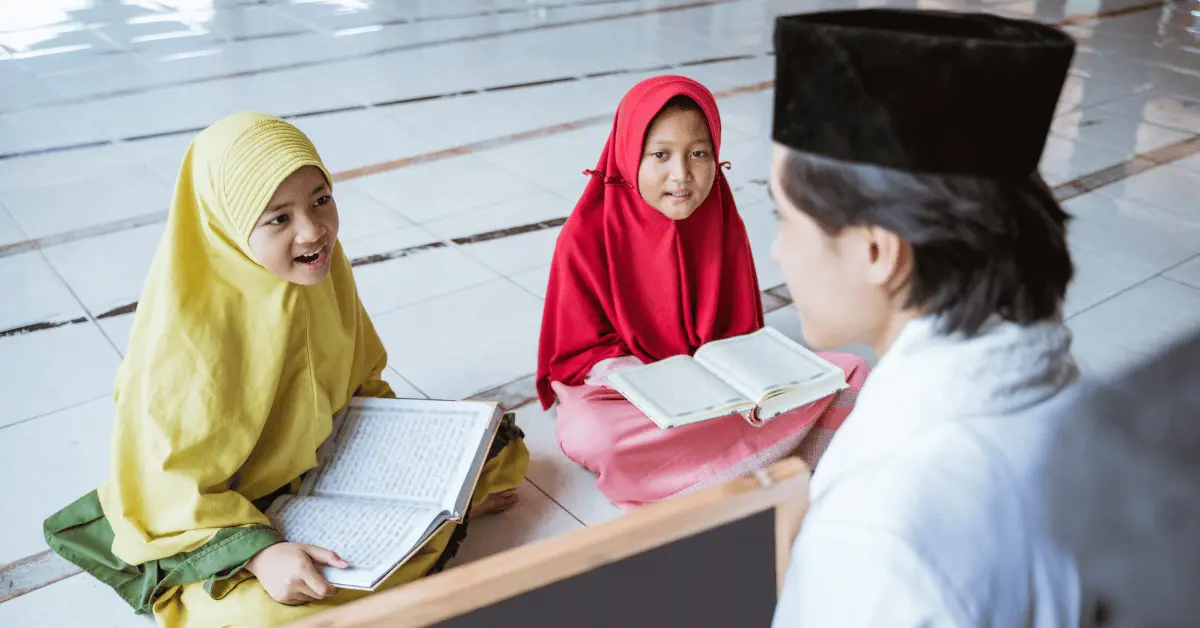
Children are naturally curious about the Kaaba. They see it on prayer mats, on calendars in the kitchen and on the television in Ramadan, and sooner or later they ask: What is that black building? Why do people walk round it? Can we go there?
Those questions are a wonderful opening. Whether your family is planning a trip soon or simply hopes to go one day, teaching children about Umrah and Hajj helps them understand their faith, its history and why Muslims all over the world face the same place in prayer. More British families than ever now take their children with them, and many of the umrah packages from uk travel agents offer are designed with families in mind. This guide suggests simple ways to teach children at home, the stories and duas to start with, and how to prepare them if they’re coming along.
Start with the stories
Children remember stories far better than facts. The rituals of Umrah and Hajj are full of them, and almost all go back to the family of Prophet Ibrahim, peace be upon him.
- Hajar and the search for water. Tell the story of Hajar, left in the dry valley of Makkah with her baby son Ismail. She ran between the hills of Safa and Marwa looking for water, seven times, trusting in Allah. Then water burst from the ground near Ismail’s feet. That water is Zamzam, and pilgrims still drink it today. When children later walk between Safa and Marwa themselves, they’ll know whose footsteps they’re following.
- Ibrahim and Ismail build the Kaaba. The Quran tells how Ibrahim and Ismail raised the foundations of the House together, asking Allah to accept their work. Children love the idea of a father and son building something so important side by side.
- The call to pilgrimage. Allah told Ibrahim to call people to Hajj, and promised that they would come from every distant place. You can point out that this includes families from Britain today.
Keep the stories short for younger children, and invite questions. Older children can read the relevant verses with you, with a translation, and talk about what they mean.
Duas and words to learn
A few short phrases are easy for children to memorise, and they’ll feel proud to say them if they travel.
- The Talbiyah. The words pilgrims repeat after entering Ihram, beginning “Labbayk Allahumma labbayk”, meaning “Here I am, O Allah, here I am”. It has a lovely rhythm and children pick it up quickly.
- Bismillah, Allahu Akbar. Said at the start of each round of Tawaf, when facing the Black Stone.
- Simple personal duas. Encourage children to think of their own duas, for their family, their friends, or anything that matters to them. A short list written in a notebook is easy to take on the trip.
If your child is already learning to read the Quran, this is a good time to practise short surahs that they can recite in their prayers at the Haram.
Make it hands-on
Learning works best when children can see and do things. Some ideas that families use:
- Make a model of the Kaaba from a box covered in black paper, and walk round it seven times, anticlockwise, saying “Allahu Akbar” at the start of each round.
- Mark Safa and Marwa at opposite ends of the hallway, and walk between them seven times while telling Hajar’s story.
- Look at a map together and trace the journey from your home town to Jeddah, then to Makkah and Madinah.
- Watch the live broadcast from the Haram and spot the Kaaba, the Maqam Ibrahim and the gates.
- Draw or colour pictures of the Prophet’s Mosque in Madinah, with its green dome.
Teaching good manners for the trip
Umrah is also a chance to teach children about adab, the good manners Muslims try to show. Talk to them about patience in queues, being gentle in crowds, not pushing to get closer to the Kaaba, and being kind to other pilgrims, many of whom will be old or tired. Explain that the Haram is a place for quiet worship, so running and shouting aren’t allowed. Children who understand why these things matter are much easier to manage once you arrive.
Explaining the difference between Umrah and Hajj
Children often hear both words and mix them up. A simple explanation works well: Umrah is the shorter visit that can be done at almost any time of year, and Hajj is the big pilgrimage that happens once a year, on special days, which every Muslim should do once in their life if they’re able.
Older children may be interested to know how families actually arrange these trips today. Booking Umrah is fairly simple. Hajj Packages from UK work differently. Pilgrims from Britain now have to register on the Saudi government’s official Nusuk Hajj platform and wait to see if they’ve been given a place, because every country has a limited number. It’s a good lesson in patience, and a reminder of why so many people save and plan for years to make the journey.
If your children are coming with you
Taking children on Umrah is a beautiful experience, but it needs extra preparation.
- Talk about the crowds. Explain that there will be many people, that they must stay close, and what to do if they get lost. Agree on a meeting point, such as a numbered gate.
- Give them an ID card. Put your name, phone number and hotel address on a card in their pocket or on a wristband.
- Plan around their energy. Do Tawaf at quieter times, such as after Fajr, and let them rest in the afternoon.
- Bring a pushchair for younger ones. It helps in the hotel and streets, even if you can’t use it everywhere in the mosque.
Pack snacks and water. Hungry, thirsty children quickly run out of patience.
Children don’t need to be in Ihram in the same way as adults, though many parents like their sons to wear a small set of white cloths and their daughters a simple abaya, so that they feel part of it. Speak to a scholar if you have questions about children’s Umrah.
Keep the memory alive
After the trip, help your children hold on to what they saw. Make a scrapbook with photos, tickets and drawings. Ask them to tell grandparents or classmates about it. Keep a small bottle of Zamzam on the shelf. And if they couldn’t come this time, involve them anyway: ask them to write a dua for you to make at the Kaaba, and bring them back a prayer mat or a box of dates from Madinah.
A lifelong connection
Teaching children about Umrah and Hajj isn’t only about preparing for a trip. It’s about helping them feel connected to a story that began thousands of years ago with Ibrahim, Hajar and Ismail, and that millions of Muslims still take part in every year. The questions they ask at five or six can grow into a deep love for the House of Allah, and perhaps, one day, a journey of their own.
